viernes, 23 de diciembre de 2016

Oracle Blogs: OSB Patching by Jon Petter

We have some customers which only use OSB - and not SOA Suite. When you want to patch - should you look only at WLS and OSB-patches? The answer is no.

One such reason is documented on MOS: Should the SOA Bundle Patches for 11g and 12c be applied to OSB (Doc ID 2102449.1). It states: In 12c, since OSB services can use JCA technology adapters, there is value in applying the SOA Bundle Patches where fixes to these adapters are included.

The other reason is because JDeveloper has common features in the two products. For example SOA patch 22226040: java.lang.NullPointer for XQuery File ver 1.0 in JDEV 12.2.1 OSB Proj - is one you would like to use for OSB on 12.2.1. The problem is shown in our blog post: OSB Patch. If the patch does not work - remember to do the cleanup-steps mentioned at the end of the blog.
My advise is to create a predefined Patch Search in MOD so you can monitor existing patches. Here are some of my searches.

clip_image002

One good thing you can see is the last time you searched. For example for OSB - then WLS, SOA and OSB are relevant. My advise is to order patches so you see the latest updates first, and that you at least should add the recommended patches. Read the complete article here.

Oracle Blogs: ORAchk 12.2.0.1.2 & EXAchk 12.2.0.1.2

ORAchk 12.2.0.1.2 & EXAchk 12.2.0.1.2 

New features include:

  • Extended Cloud support including Big Data Cloud Services
  • Enhanced Elastic Stack integration
  • Collection Manager health score filtering
  • Oracle Platinum Services support for Oracle Auto Service Request on qualified Original Equipment Manufacture (OEM) fault events
  • Support for Exadata Sparc Linux platform

jueves, 22 de diciembre de 2016

Crux Consultores buscamos "TALENTOSOS DESARROLLADORES"


Buscamos gente como vos, te invitamos a formar parte de nuestro equipo de trabajo. 
Envía su cv a rrhh@cruxconsultores.com

Oracle Hot Topics: NESTED MVIEW IS REFRESHED COMPLETE EVEN FAST IS SPECIFIED

Bugs

Bug
Product Area
Bug ID
Last Updated
Oracle Database - Enterprise Edition
24430701
Wed, 21 Dec 2016 03:25 GMT-06:00

Product News

News
Product Area
Last Updated
Oracle Database - Enterprise Edition
Tue, 20 Dec 2016 15:22 GMT-06:00

Knowledge Articles


Knowledge Article
Product Area
Last Updated
Oracle Database - Enterprise Edition
Wed, 21 Dec 2016 06:44 GMT-06:00

Oracle Blog´s Who needs a service bus anyway? By Milco Numan


clip_image002Some time ago I was having a discussion about the setup of a SOA project on which a former colleague was about to work on. The purpose of this project was to implement a synchronous service API for a third party systems to integrate with. This API needed to conform to a B2B standard (written some ten years ago) and in their particular case, it would need to provide data from their legacy ERP system.

The API description consists of several different ‘business operations’ where their request messages come in over HTTP in a variety of predefined formats, e.g. as an HTTP GET operation where the parameters are encoded in the URL string or sending an HTTP POST operation where the request message is contained in the body: in both cases, the response is handed back as an XML message. In order not to exclude third party systems, both flavours of operations would need to be implemented.

One of the other requirements for the API was that it needed to implement an operation to list all operations that it currently supports, together with the endpoints on which these operations need to be invoked.

Restrictions

One of the current implementation of the third party systems they were looking to integrate with was quite quirky in that it required all operations to have the exact same endpoint. So, it was a tough choice to either exclude this system from the possible clients and create a ‘proper’ implementation where all operations have their own endpoints, or to provide an implementation where there’s only one endpoint that basically functions as a dispatcher for the different operations.
Summarizing:
  • XML POST interface, request = XML, response = XML for all operations
  • HTTP GET interface, request = None, response = XML for all operations
  • Provide a single endpoint accepting all these requests at the same address

Service Bus to the rescue

As we were discussing the project and its requirements, it turned out that their internal IT department had already started development using Oracle SOA Suite, as their skills in BPEL were ‘the hammer that made this problem look like a nail’. However, my feeling was that this project would actually be much better off by the introduction of Oracle Service Bus to transform different message formats into a generic XML representation (and depending on the complexity: implement the message flows entirely in Service Bus or offload the more complicated ones to SOA Suite).

Scenario

As I am somewhat branded by my background in chemistry, I will show my proposed implementation using some ‘chemical’ webservices from WebServiceX as an example. For the backend implementation, invariably the SOAP implementation of the service will be used. For my convenience, I am reusing the XML structures that are provided by the WebserviceX implementations, saving myself the hassle of transforming the messages structurally or with respect to their namespaces.

In the following scenario, I am exposing two operations (GetAtomicNumber and GetAtomicWeight) in two different message formats:

HTTP GET: http://server:host/HttpGetAtomicNumber?RequestName=GetAtomicNumber&elementName=boron
XML POST: http://server:host/GetAtomicNumber

Furthermore, all operations will also be available at a consolidated endpoint for both request message formats, at http://server:host/OneProxyForAll

Schematic implementation

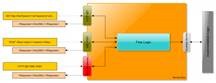
The following diagram shows a schematic representation of the desired setup; on the left hand side, you can see the exposed proxies (HTTP GET, XML POST and Generic Gateway), connected through some Service Bus flow logic with a Service Bus Business Service, exposing the actual implementation logic:

Environment


The sample project was built using Oracle’s 12.1.3 Virtual Image, downloadable from Oracle Technology Network. Read the complete article here.

Oracle: Architect Community Newsletter Best of 2016

Architect Community Newsletter
Oracle

Connect with OTN
Oracle Blog
Oracle on Facebook
Oracle on Twitter
Oracle on LinkedIn
Oracle on Youtube
Home
Subscribe
December
2016


Best of 2016
"What's past is prologue," proclaimed a rather well-known 17th century playwright. And that is certainly true of software development and enterprise IT. This edition of the newsletter looks back at the best of 2016, at content that drew the most attention from you, the members of the OTN architect/devloper community.

Note: The Oracle Code event series mentioned last month becomes a reality in 2017, with the Oracle Code San Francisco on March 1st, and Oracle Code New York on March 21st. The Call for Papers for the San Francisco event is now open, closing on January 2, 2017.

Speak up! Your feedback is essential to the success of this publication and of OTN in general. If you have comments or suggestions regarding this newsletter or any of the resources for architects and developers on OTN, please share your thoughts: bob.rhubart@oracle.com.
Bob Rhubart, Manager, OTN Architect/Middleware Community

Featured Content
TOP TECH ARTICLES
Arrow
Published in February 2016, the #1 article for 2016 was written by Oracle ACE Associate Sandra Flores, a SOA architect. The article presents an illustrated overview of the 12.2.1 release of Oracle SOA Suite.
Read the article.

Arrow
In the #2 position, this 4-part article series by Oracle ACE Director Joel Perez and ACE Arturo Viveros was published in January 2016. Written for architects and IT managers, the article addresses both cloud-to-cloud and cloud-to-on-prem integration.
Read the article.

Arrow
The article in the #3 position for 2016 is actually a sample chapter from Oracle SOA Suite 12c Administrator's Guide (2015, Packt Publishing), written by Arun Pareek, Oracle ACE Ahmed Aboulnaga, and ACE Associate Harold Dost.
Read the article.

PODCASTS
TOP PODCASTS
Arrow
Whether you’re an active Oracle user group member, or just pressing your face against the window wondering what’s going on, you’ll want to listen to this April 2016 podcast that explores the user group experience from the unique perspectives of four people whose participation has evolved from that of noobie members to leadership roles within their respective organizations.
Listen to the podcast.

Arrow
Coming in at #2, this March 2016 podcast features Oracle ACE Director Cameron Lackpour, ACEs John Booth and Tim German, and colleagues Martin Neulip and Mike Nader, respectively the editor and contributing authors of Developing Essbase Applications: Hybrid Techniques and Practices (2015, CRC Press).
Listen to the podcast.

Arrow
The #3 most-downloaded podcast for 2016 was published in March, and features a discussion with Arun Pareek, Oracle ACE Ahmed Aboulnaga, and ACE Associate Harold Dost, the people responsible for the #3 most-read article for 2016.
Listen to the podcast.

Audio / Video
TOP VIDEOS
Arrow
The most-watched video for 2016 is this interview with Shay Shmeltzer, director of product management for Oracle mobile and development tools. Published in February, the video features a discussion of Oracle ADF, MAF, and JET, and reveals how Shay responds to people who ask, "What framework should I use?"
Watch the video.

Arrow
The #2 video for 2016, published in March, features Vikas Anand (Senior Director, Product Management, Oracle SOA Suite/Integration Cloud Service) and Ram Menon (Product Manager, Oracle Integration Cloud Service) in a discussion about meeting SOA and integration challenges on-prem and in the cloud.
Watch the video.

Arrow
The #3 most-watched video, also published in March, is a video replay of Oracle ACE Director Lonneke Dikmans's session in Middleware track of the OTN Virtual Technology Summit event held that same month.
Watch the video.

Product News
PRODUCT NEWS
Arrow
This release includes Express API, which allows you to design and author APIs in less than 5 minutes without writing any code, Zero footprint Enterprise SSO, and SMS notifications for engaging customers in Apps.
Learn more.

Arrow
Part of the Oracle Customer Experience (CX) Cloud Suite, this packaged integration between Oracle Service Cloud and Oracle IoT Cloud reduces the complexity of IoT projects
Learn more.

Arrow
This cumulative bundle patch includes all fixes released in previous EBS 12.2.5 bundle patches. It includes fixes for formatting issues with email notifications after 12.2.5 upgrade, and for improper rendering of right-to-left language sessions in Internet Explorer when default browser language is set as Arabic.
Learn more.

Workshops and Events
WORKSHOPS AND EVENTS
Arrow
The Oracle Cloud Day series of live events features keynotes from Oracle Cloud executives and guest speakers, followed by individual sessions geared toward developers and IT managers, as well as business managers. Events are scheduled in cities around the globe.
Click here for more information.

Arrow
Coming to 20 cities globally, Oracle Code is an event for developers building modern Web, mobile, enterprise and cloud-native applications. These events will focus on the latest software developer technologies, practices and trends, including: Containers, Microservices/APIs, & DevOps; Databases; Open Source Technologies; Development Tools & Low Code Platforms; Machine Learning, Chatbots & AI. Dec 5-7, 2016. Birmingham, UK.
Click here for more information.

Arrow
Learn from Oracle ACEs and industry leaders in a vast selection of sessions covering key topics and technologies. April 2-6, 2017, Las Vegas, NV
Click here for more information.

Oracle: Directivo George Polisner, dice NO al apoyo de Catz a TRUMP

Fuente: Lora Kolodny, techcrunch.com

El miembro de Oracle Corp., George A. Polisner, ha dimitido después de que el co-CEO de la empresa, Safra Catz, se uniera al equipo de transición Trump y manifestará su entusiasmo por el presidente electo.

Trump recientemente convocó a una reunión de líderes tecnológicos en la Trump Tower en Nueva York.

Antes de la reunión Catz emitió una declaración pública que decía:

"Planeo decirle al presidente electo que estamos con él y lo ayudaremos de cualquier manera que podamos. Si puede reformar el código tributario, reducir la regulación y negociar mejores acuerdos comerciales, la industria tecnológica estadounidense será más fuerte y más competitiva que nunca ".
Después de la reunión, Catz aceptó una invitación para unirse al equipo de transición de Trump.

Polisner, es un veterano de la tecnología de la empresa y estratega político progresista, que anteriormente ocupó una amplia variedad de posiciones en Oracle. Durante diferentes períodos desde 1993, trabajó en Oracle en desarrollo de productos, defensa de clientes, administración de programas y más recientemente en el desarrollo de servicios administrados en la nube.

Él dió conocer su renuncia ayer a la compañía y al público publicando su carta en LinkedIn. Allí criticó a Trump por estar planeando desmantelar la seguridad social y la asistencia médica, así como incitar al miedo, el odio y la violencia hacia las personas de color, los musulmanes y los inmigrantes; entre otras cosas.

"No estoy con el presidente electo Trump y no estoy aquí para ayudarlo de ninguna manera. De hecho cuando sus políticas vayan a lo inconstitucional, lo criminal y lo moralmente injusto, estoy aquí para oponerme de todas las maneras posibles y legales.
Por lo tanto, debo renunciar a esta gran compañía."
Polisner también ha creado una petición en NotWhoWeAre.us para que otros empleados de Oracle protesten públicamente por la participación de Catz en el equipo de transición de Trump.

miércoles, 21 de diciembre de 2016

Schema Wars Episode 3: The SQL Redemption

Poll a Microsoft Exchange mailbox from OSB using DavMail by Laurens van der Starre


By Oracle Blog´s.

The Oracle Service Bus has built in features to poll an IMAP of POP3 mail account. There are loads of excellent blog posts that exactly describe how to do it. However, when the mail server happens to be a Microsoft Exchange server, things become shady. Exchange’s IMAP implementation tends to be not really that compatible, and the server log will fill up with stacktraces such as:

clip_image002Of course we can connect using the Exchange Web Services (EWS) using the OSB, but that is loads of work. Luckily there is DavMail. DavMail is an gateway that sits in between Exchange and your third party mail clients. Using DavMail, you can connect using simple POP3 or IMAP protocols to DavMail which in turn connects to Exchange using the EWS. DavMail is build in java, and runs happily on WebLogic Server.

So, download DavMail’s WAR distribution for SourceForge. Unpack the WAR-file and edit the properties file in WEB-INF/classes.


Set is to run in Server mode, and let it know where the EWS is: Read the complete article here.

FBI: Three Romanian nationals indicted in cyber fraud case in which they infected 60,000 computers, sent out 11 million malicious emails and stole at least $4 million

Department of Justice
U.S. Attorney’s Office
Northern District of Ohio

FOR IMMEDIATE RELEASE
Friday, December 16, 2016
A 21-count indictment was unsealed in which three Romanian nationals were charged for operating a cyber fraud conspiracy in which they infected 60,000 computers, sent out 11 million malicious emails and stole at least $4 million, said U.S. Attorney Carole S. Rendon and FBI Special Agent in Charge Stephen D. Anthony.

Bogdan Nicolescu, 34, Tiberiu Danet, 31, and Radu Miclaus, 34, were extradited to the United States this week after being taken into custody in their native Romania earlier this year. They are each charged with conspiracy to commit wire fraud, conspiracy to traffic in counterfeit service marks, aggravated identity theft, conspiracy to commit money laundering and 12 counts each of wire fraud.
“This case illustrates the sophistication and determination with which cyber criminals seek to harm Americans and American businesses from abroad,” said Assistant Attorney General Leslie R. Caldwell.  “But our response demonstrates that, with effective international cooperation, we can track these criminals down and make sure they face justice, no matter where or how they try to hide.”
“These defendants stole millions of dollars from people in the United States through a sophisticated fraud conspiracy they operated in Eastern Europe,” Rendon said. “Cybercrime is an ever-growing threat. We will continue to work with both our partners in law enforcement and in the private sector to evolve with the threat and protect our networks and national security.”
“This indictment and subsequent arrests reveal the dynamic landscape in which international criminals utilize sophisticated cyber methods to take advantage of and defraud, unsuspecting victims,” Anthony said. “Despite the complexity and global character of these investigations, these arrests demonstrate the commitment by the FBI and our partners to aggressively pursue these individuals and bring justice to the victims.” 
According to the indictment filed in U.S. District Court in the Northern District of Ohio:
Nicolescu, Danet and Miclaus collectively operated a criminal conspiracy from Bucharest, Romania. It began in 2007 with the development of proprietary malware, which they disseminated through malicious emails purporting to be legitimate from such entities as Western Union, Norton AntiVirus and the IRS. When recipients clicked on an attached file, the malware was surreptitiously installed onto their computer.
This malware harvested email addresses from the infected computer, such as from contact lists or email accounts, and then sent malicious emails to these harvested email addresses. The defendants infected and controlled more than 60,000 individual computers, primarily in the United States.
Controlling these computers allowed the defendants to harvest personal information, such as credit card information, user names and passwords. They disabled victims’ malware protection and blocked the victims’ access to websites associated with law enforcement.
Controlling the computers also allowed the defendants group to use the processing power of the computer to solve complex algorithms for the financial benefit of the group, a process known as cryptocurrency mining.
The defendants used stolen email credentials to copy a victim’s email contacts. They also activated files that forced infected computers to register email accounts with AOL. The defendants registered more than 100,000 email accounts using this method. They then sent malicious emails from these addresses to the compromised contact lists. Through this method, they sent more than 11 million malicious emails.
When victims with infected computers visited websites such as Facebook, PayPal, eBay or others, the defendants would intercept the request and redirect the computer to a nearly identical website they had created. The defendants would then steal account credentials. They used the stolen credit card information to fund their criminal infrastructure, including renting server space, registering domain names using fictitious identities and paying for Virtual Private Networks (VPNs) which further concealed their identities.
The defendants were also able to inject fake pages into legitimate websites, such as eBay, to make victims believe they were receiving and following instructions from legitimate websites, when they were actually following the instructions of the defendants.
They placed more than 1,000 fraudulent listings for automobiles, motorcycles and other high-priced goods on eBay and similar auction sites. Photos of the items were infected with malware, which redirected computers that clicked on the image to fictitious webpages designed by the defendants to resemble legitimate eBay pages.
These fictitious webpages prompted users to pay for their goods through a nonexistent “eBay Escrow Agent” who was simply a person hired by the defendants. Users paid for the goods to the fraudulent escrow agents, who in turn wired the money to others in Eastern Europe, who in turn gave it to the defendants. The payors/victims never received the items and never got their money back.
This resulted in a loss of at least $4 million.
The Bayrob group laundered this money by hiring “money transfer agents” and created fictitious companies with fraudulent websites designed to give the impression they were actual businesses engaged in legitimate financial transactions. Money stolen from victims was wired to these fraudulent companies and then in turn wired to Western Union or Money Gram offices in Romania. European “money mules” used fake identity documents to collect the money and deliver it to the defendants, according to the indictment
This case is being prosecuted by Assistant U.S. Attorneys Duncan T. Brown and Om Kakani and Brian Levine, Senior Counsel with the Justice Department’s Computer Crime and Intellectual Property Section. The case was investigated by the FBI, with assistance from the Romanian National Police.
If convicted, the defendants’ sentences will be determined by the court after review of factors unique to this case, including the defendant’s prior criminal record, if any, the defendant’s role in the offense and the characteristics of the violations.  In all cases, the sentence will not exceed the statutory maximum and, in most cases, it will be less than the maximum.
An indictment is only a charge and is not evidence of guilt.  A defendant is entitled to a fair trial in which it will be the government’s burden to prove guilt beyond a reasonable doubt.
Topic: 
Cyber Crime
Financial Fraud